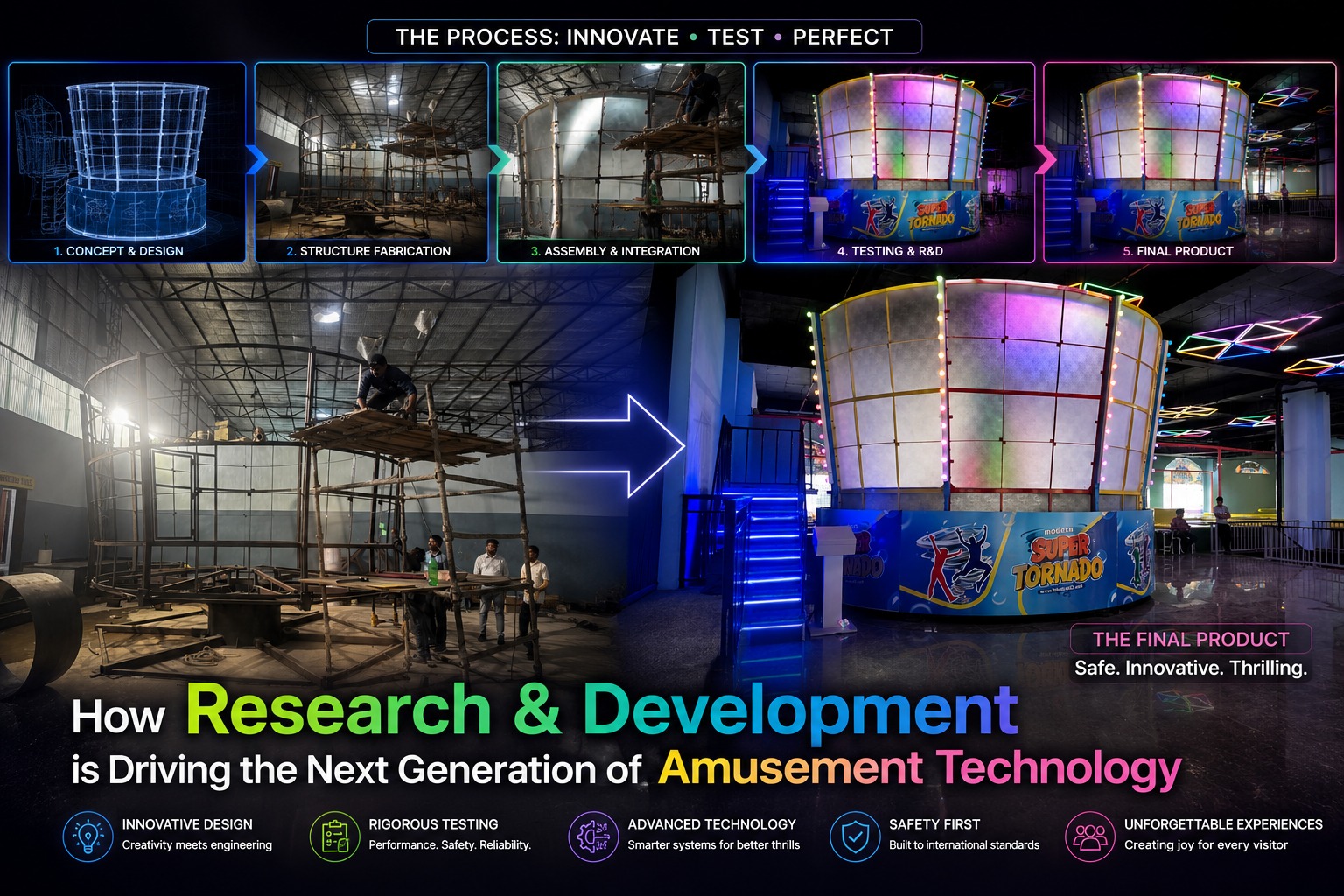
This is the point at which research and development gains significance.
Research and development within the amusement sector goes beyond just creating a new attraction. It may involve enhancing equipment responsiveness, minimizing mechanical wear, simplifying control operations, optimizing space utilization, or discovering superior methods to integrate hardware and software. A minor enhancement in engineering can result in a significant impact when a ride is utilized hundreds of times daily.
A helpful method to grasp this process is by using prototyping. Before an idea turns into a completed attraction, engineers can evaluate parts, interaction techniques, and operating conditions to detect weaknesses at an early stage. Sensors can be assessed for precision. Systems in motion can be verified for ongoing performance. Software interfaces can be modified based on how swiftly users comprehend them. The aim is straightforward: discover what is effective in reality, not merely in theory.
This is particularly crucial as entertainment turns increasingly interactive. Virtual reality systems, simulators, RFID-integrated experiences, and immersive theaters rely on multiple systems functioning in unison. Hardware must interact consistently with software. Sensors must accurately identify movement or engagement. Operators require functional controls, whereas customers anticipate the experience to be immediate and instinctive.
For manufacturers and amusement operators, this introduces an additional challenge: scalability of reliability. An attraction placed in a bustling family entertainment center must not be created solely for infrequent use. Equipment must endure frequent use, regular maintenance, and evolving user habits. Effective R&D takes into account the complete lifecycle of a product—from its initial prototype to installation, maintenance, and future enhancements.
The experience of Modern Group serves as an important illustration of the significance of this engineering perspective. Beginning in 1987 with RP Maheshwary in ceiling fan production, the group gained expertise in manufacturing, technology, and retail before venturing into entertainment. That background has been utilized for entertainment products and experiences throughout India, through Modern Masti Private Limited under the leadership of founder and managing director Ankur Maheshwary.
Its involvement with 5D, 7D, and 9D theaters, VR gaming technologies, RFID applications, amusement machinery, and gaming infrastructure illustrates an industry where physical engineering and digital engagement are increasingly intertwined. Masti Zone extends these features to customer-facing settings with attractions that include VR gaming, bumper cars, snow parks, cricket simulators, laser games, trampolines, and interactive play.
The group's acknowledgment by the Indian Association of Amusement Parks and Industries (IAAPI) for creative amusement products highlights the importance of product development in this industry.
The future of entertainment technology will probably be characterized less by one impressive device and more by the intelligent collaboration of various systems. Enhanced sensing, smarter management, flexible software, effective maintenance, and careful space design can subtly elevate the experience without the customer realizing the engineering involved.
This is arguably the most fascinating aspect of R&D in entertainment: when the engineering is executed effectively, the technology fades into the experience, and all the visitor recalls is the enjoyment they felt.
By Modern XD · 31 Aug 2026
← Back to Newsroom