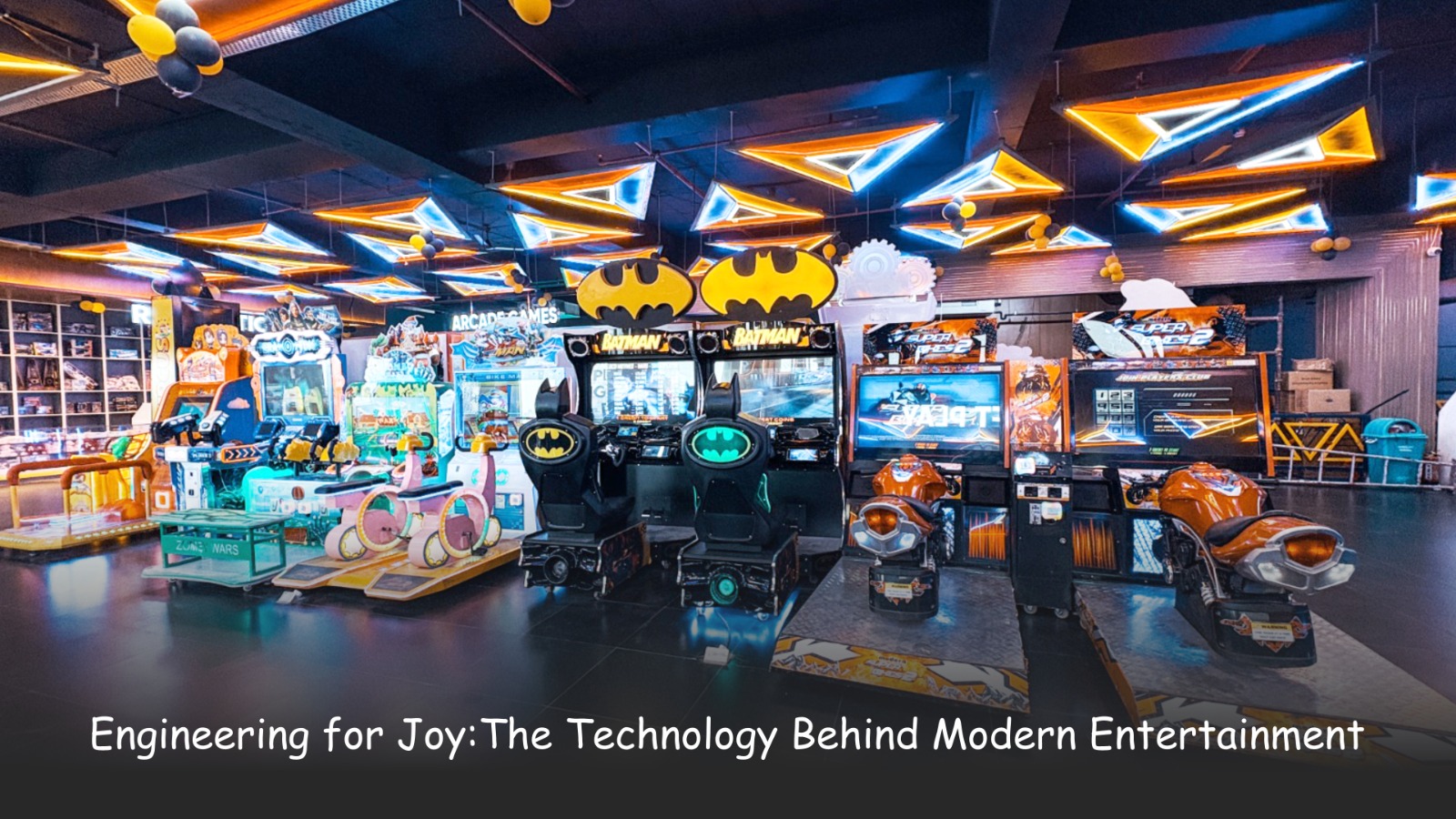
At Modern Group, that work begins much earlier than the finished attraction suggests. An idea for an amusement product has to answer practical questions before it can become exciting: How will a visitor interact with it? How often will it be used? What happens when hundreds of people use it every day? How should it move, respond and stop? And, perhaps most importantly, how can it remain engaging without compromising safety?
Modern Group's manufacturing experience, starting in 1987, has established a basis for addressing these inquiries. The team’s shift into amusement devices and entertainment tech introduced engineering into a realm where success is gauged not just by specifications, but by people’s responses as well. A successful attraction must comprehend its audience.
Think about motion technology. A simulator that operates at a sluggish pace might seem detached from the activity. An overly sharp reaction can completely disrupt the experience. The engineering challenge exists in a space between the two, where the movement is instinctive enough for the visitor to overlook that motors, controls, and mechanical systems are responsible for it.
VR adds an extra dimension. The digital realm might be virtual, yet the body that undergoes it is entirely real. Monitoring, reaction time, visual alignment, and physical motion must closely coordinate. A tiny inconsistency can disrupt immersion.
Next is manufacturing, where the concept transitions from the screen and assumes a tangible shape. Metal frameworks, electrical networks, mechanical parts, sensors, and control devices merge via fabrication and assembly. Each element serves a purpose, and each link impacts the overall performance. However, construction is not the end goal.
Testing determines an attraction's position on an entertainment level. Systems operate continuously. Movement is verified. Sensors are analyzed. Safety systems are put to the test. Components are examined for uniformity. If something fails to work as expected, the process reverses before advancing once more.
The process of creating, evaluating, and improving is fundamental to Modern Group's method for amusement technology. Its involvement with VR simulators, 7D theaters, RFID systems, and various entertainment devices shows a wider comprehension: an attraction shouldn't be evaluated solely on its visual appeal. It must function dependably when actual users start engaging with it. Ultimately, engineering's contribution lies in entertainment.
It transforms a concept that is written down into action. It transforms technology and makes it user-friendly. It combines various elements to create an experience that can make a child giggle, a family challenge each other, or a group of friends quickly request another game. The guest observes the enjoyment.
Modern Group recognizes all the elements that need to function flawlessly to create that enjoyable sensation.
By Modern XD · 22 Aug 2026
← Back to Newsroom