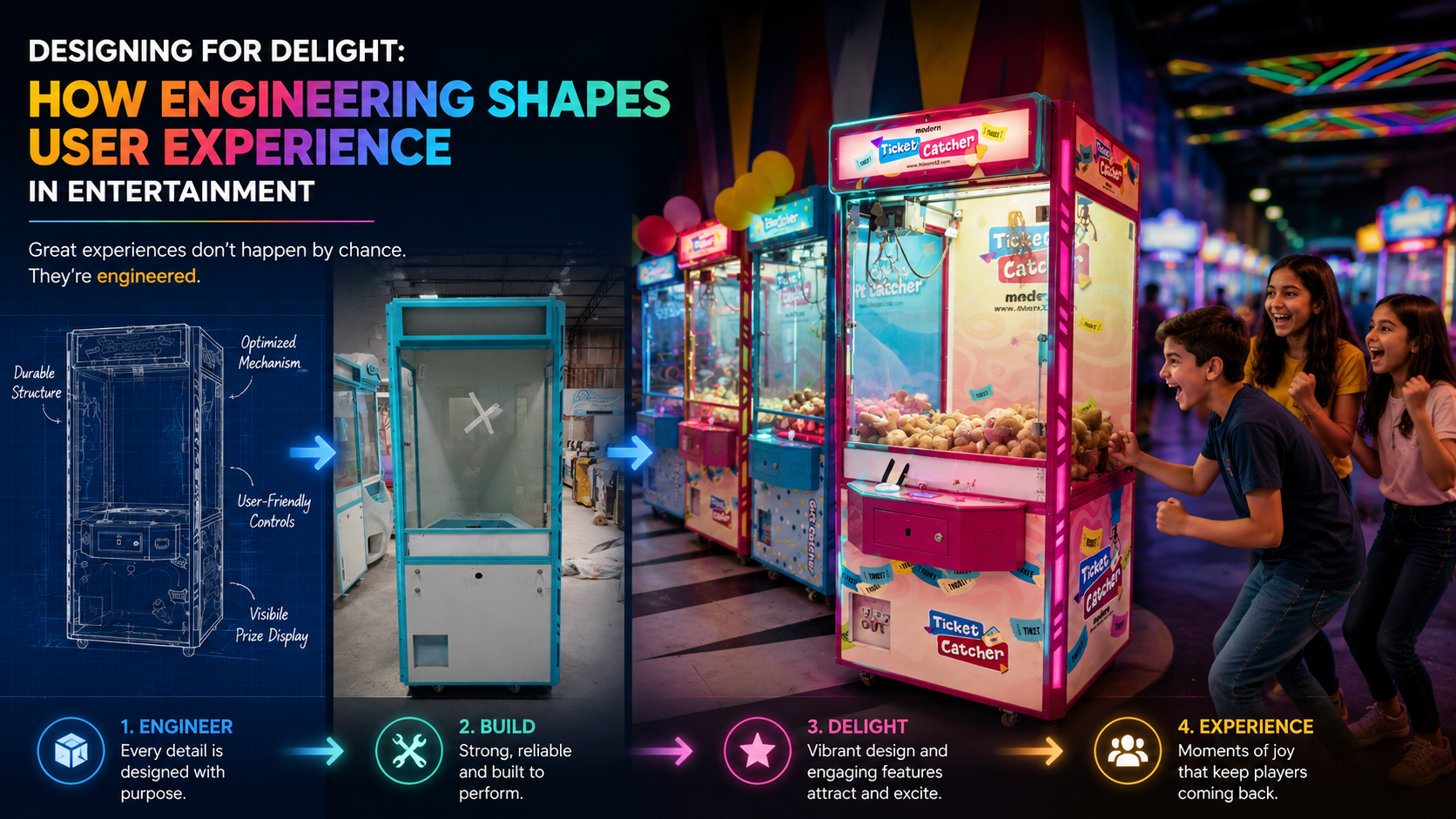
Every touchpoint is matched to performance characteristics in Modern Group's engineering approach to experience design. A human-centric design framework that incorporates ergonomics, motion dynamics, and sensory feedback is used to create attractions. Motion-based simulators, for example, are designed with multi-axis actuation systems that provide controlled acceleration profiles, guaranteeing realism without sacrificing safety standards or user comfort.
In immersive settings, latency optimization is crucial. Response times in virtual reality and interactive gaming systems are optimized to function within latency windows of less than 20 milliseconds, reducing motion sickness and boosting realism. Synchronized hardware-software integration, in which motion control, graphics processing, and user input systems run on single control loops, is how this is accomplished.
Engagement is further enhanced by audio-visual engineering. Central control units coordinate high-lumen projection systems, calibrated surround sound, and environmental effect modules including air blasts, vibration motors, and smell diffusion. Because these systems are pre-programmed with scenario-based triggers, they may be dynamically adjusted according to how the user progresses through the experience.
Material selection and structural design also contribute significantly to user perception. Anti-slip and anti-microbial coatings are applied to contact surfaces, and high-cycle fatigue tests are performed on structural elements to ensure they can sustain repeated use. Queue management systems and spatial arrangements are designed to maximize flow rates in high-traffic areas, cutting wait times and raising customer satisfaction.
Additionally, Adaptive software layers are incorporated into the attractions of Modern Group. RFID-enabled tracking devices can be used to collect previous engagement data or user demographics to dynamically modify game complexity, scoring algorithms, and interaction intensity. Experiences are kept interesting for both new and returning visitors because to this degree of customisation.
Modern Group turns entertainment into a precisely calibrated system of interactions by integrating engineering intelligence into every layer of design. Reliability, immersion, and user happiness are engineered objectives rather than incidental elements, resulting in a consistently high-quality experience rather than merely entertainment.
By Modern Group · 06 May 2026
← Back to Newsroom